FCC approves Amazon’s internet-from-space constellation of 3,236 satellites
5 by kerng | 0 comments on Hacker News.
Friday, 31 July 2020


Thursday, 30 July 2020
Wednesday, 29 July 2020
Tuesday, 28 July 2020
New on SI: 2020 Fantasy Football: Top WR1 & WR2 Scoring Targets
SI Fantasy high stakes analyst Shawn Childs provides a WR1 and WR2 scoring breakdown, and projects what point targets players need to hit to gain an edge.
This is an article from our FFWC Target Points series. If you're a FullTime Fantasy subscriber,
you can read this premium article here.Unlock premium access to the full outlook by subscribing to FullTime Fantasy where we will help you dominate with our Draft Kit, customized rankings, expert consensus rankings, Preseason Pro, Advanced ADP, Premium forums to ask our experts unlimited questions 24/7 & more. Check us out! Click here to subscribe now using promo code TD30 for 30% off your first two months!
I have to admit I have a weakness for the WR position. I like strength at wide receivers, which allows me to make fewer decisions when setting my starting lineup. Here’s look at the top 12 wide receivers over the last four seasons:
Top 12 WR point totals (2016 – 2019)


To view the full list of WR1 & WR2 rankings, scoring targets & projections, subscribe now using promo code TD30 for 30% off your first two months!
WR1: Last year the average top 12 WRs averaged 94 catches for 1,250 yards, and 9.4 TDs (2018 – 104 catches for 1,381 yards and 9.4 TDs, 2017 – 92 catches for 1,231 yards and seven TDs, 2016 – 92 catches for 1,212 yards and 9.2 TDs, 2015 – 103 catches for 1,396 yards and 10 TDs, 2014 – 97 catches for 1,406 yards and 10 TDs, and 2013 – 95 catches for 1,401 yards and 10 TDs), which translated to 268.43 fantasy points in full-point PPR leagues or 16.78 points per week. The WR1 position had its weakest output (16.19 FPPG) in 2017 over the past seven seasons.
2018 ended up being the return of the elite WR1 after showing similar stats in 2015. The average RB1 outscored the average WR1 by 1.44 fantasy points in 2019, which is the big reason running backs have been flying off the boards in the 2020 draft season.
The top 12 wide receivers lost value in 2017 (259.11 Fantasy points) while being outscored by the top 12 running backs (274.77) by 15-plus fantasy points per week.
FFWC Point Totals WR1 Observations
Overall, an elite three-down running back has an edge in almost every season. There will be an exception when a top receiver catches plus receptions or scores a high volume of TDs (Randy Moss 2007 – 98/1523/23, Calvin Johnson 2011 – 96/1681/16, Marvin Harrison 2004 -143/1722/11, and Wes Welker 2011 – 122/1569/9).
One of my goals on draft day is to eliminate as many weekly lineup decisions as possible. The more decisions a fantasy owner has to make from week-to-week, the higher the chance of being wrong. The WR position is very volatile. If a fantasy owner has too many players that look the same, it is nearly impossible to maximize your success over a long football season.
A fantasy owner that decides to draft a WR strong team in a PPR league will eliminate much of the decision-making process for two possibly three WR positions. This owner MUST draft one strong running back as the core of his roster.
Expected Gains/Losses for the Top 12 2020 WRs

These are based on our early projections here at FullTime Fantasy.
To read the rest, along with the complete list of WR1 & WR2 rankings, scoring targets & projections, subscribe now using promo code TD30 for 30% off your first two months!
Friday, 24 July 2020
New on SI: Reliving the 10 Best Wins in Houston Texans History
The Texans have only played for 18 seasons, but they have had plenty of memorable victories. This article will explore the 10 greatest wins in Texans history.
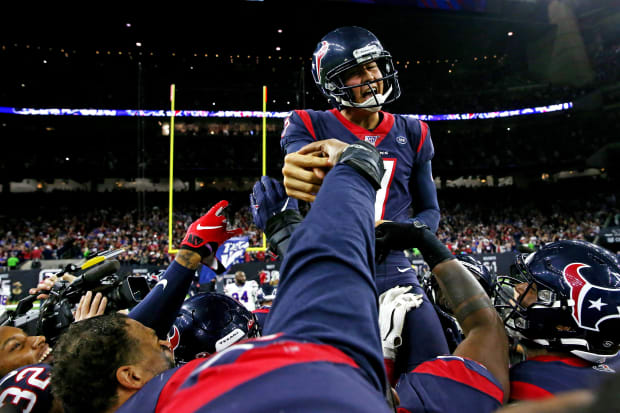
The 10 Greatest Texans Wins of All Time
The Texans may have the shortest history among current NFL teams—a mere 18 seasons—but that hasn’t stopped them from filling it with memorable moments. From the day the team first took the field right through the first round of the 2019 postseason, Houston has produced a plethora of meaningful victories. And while they have done their fair share of losing, a look at the numbers shows that the Texans are still one of the more successful expansion franchises since 1976:
- All-Time Record: 131–157
- Playoff Record: 4–6
- Championships: 0 (no Super Bowl appearances)
- Winning Seasons: 8
- Playoff Appearances: 6
- Best-Ever Regular Season: 12–4 in 2012
- Worst-Ever Regular Season: 2–14 in 2005 and '13
From emotionally charged victories over rivals to tight thrillers in the postseason, the Texans have seen a little bit of everything in their 131 triumphs. What follows is a list of the 10 most memorable victories in Texans history (and a handful of honorable mentions). Selections are based on historical significance, as well as how much the win impacted the team’s future.
10. Dec. 8, 2002—Texans vs. Steelers
- Score: Texans 24, Steelers 6
- Significance: Texans seal a stunning win over Steelers without scoring an offensive touchdown
The Texans pulled off one of the most stunning victories in NFL history in an otherwise meaningless game late in their first season as an expansion franchise. Houston’s offense gained just 44 yards—setting an NFL record for fewest offensive yards in a victory—but the defense came to the rescue with three touchdowns in a 24–6 win over the Steelers, who had their playoff chances dampened by the loss.
"We're not the typical expansion team,'' said Texans cornerback Aaron Glenn, who scored on interception returns of 70 and 65 yards. "We're not going to lay down and say, 'Oh, we're not supposed to win, we're an expansion team.' We have nothing to lose, we're trying to be a spoiler.''
The Steelers came into the matchup having gone 6-1-1 over their past eight games, and the Texans became the third first-year expansion team since 1995 to beat Pittsburgh. Offensively, Houston had seen struggles all season, with just 16 touchdowns in 13 weeks, but in this game, things were even worse than usual. Rookie quarterback David Carr completed just three passes and was sacked four times, and the Texans' offense gained a paltry three first downs.
9. Dec. 1, 2008—Texans vs. Jaguars
- Score: Texans 30, Jaguars 17
- Significance: Texans shine in first appearance on Monday Night Football
With a then-record crowd of 70,809 fans in attendance, the Texans put up a performance worth remembering during their first appearance on Monday Night Football. Third-year defensive end Mario Williams had three sacks, and rookie running back Steve Slaton scored twice in the second half of Houston’s 30–17 victory over Jacksonville. It was the second game in a four-game winning streak for the Texans, who closed the 2008 season by going 5–1 down the stretch for a second straight 8–8 finish. They carried that late-season momentum into 2009, finishing 9–7 for the first winning record in franchise history.
Slaton also etched his name into Texans history that night by tying the franchise’s rookie record for rushing touchdowns in a season. He’d add his ninth touchdown in the season finale against the Bears to establish a new record that still stands. Slaton’s 130-yard showing against the Jaguars also helped him break the rookie record for rushing yards in the season. He ended up with 1,282 yards on the year to best Domanick Williams’ 2003 mark of 1,031.
In total, the Texans have appeared on Monday Night Football 15 times, but they have only a 5–10 record. Overall in primetime games, Houston is 17–24.
8. Dec. 24, 2006—Texans vs. Colts
- Score: Texans 27, Colts 24
- Significance: Texans get past AFC South juggernaut Colts for first time
The Texans weren’t supposed to beat the playoff-bound Colts on Christmas Eve, but kicker Kris Brown and running back Ron Dayne missed the memo. Despite injuring his ankle in the first quarter, Dayne played on and ran for a career-high 153 yards. Brown knocked in a 48-yard field goal as time expired to give Houston a stunning 27–24 victory over Indianapolis, which was closing in on a fourth straight AFC South Division championship. It was the first win in the rivalry for the Texans, who had lost their first nine games to the Colts. Of those games, only one was decided by fewer than nine points.
“It’s one of the most unselfish team efforts I’ve ever been around,” said coach Gary Kubiak. “We probably couldn’t have played any better” (Duffey, 2006).
The victory was a highlight in a season that saw the Texans jump from a 2–14 record the year before to finish at 6–10. Victories over strong teams can improve a team’s confidence, and Houston’s next three seasons all finished at .500 or better. As for the Colts, the loss didn’t seem to hold them back—they defeated the Bears in that season’s Super Bowl. Indianapolis only lost to four teams in 2006, including each of their AFC South rivals, and the Texans were the only team with a losing record that beat the Colts.
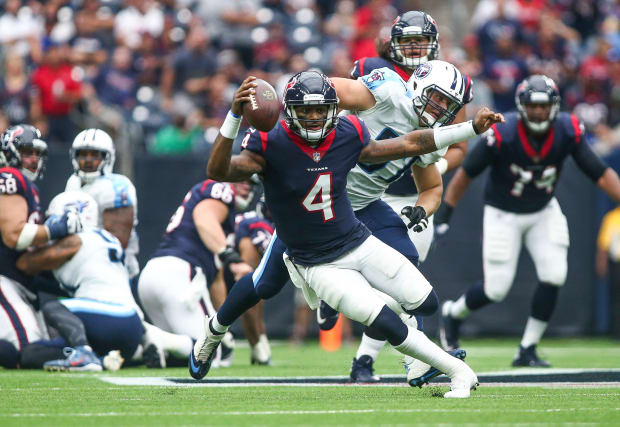
7. Oct. 1, 2017—Texans vs. Titans
- Score: Texans 57, Titans 14
- Significance: Rookie quarterback sets record in highest-scoring game in team history
There was already plenty of excitement in Houston surrounding rookie quarterback Deshaun Watson, but it reached new heights after his record-breaking performance against the Titans. Watson accounted for five touchdowns as the Texans roughed up the Titans 57–14 in the highest-scoring effort in franchise history. In just his third start, Watson became the first rookie since Fran Tarkenton in 1961 to pass for four touchdowns and rush for another. (Prior to this 57-point effort, Houston’s best single-game showing also came against the Titans in a 45–21 victory in 2014.)
Austin American-Statesman columnist Kirk Bohls summed up the excitement surrounding Watson by writing after the game that his performance set in motion “a buzz about a seemingly predestined hero.” He then compared Watson to two Houston sports legends—Hall of Fame running back Earl Campbell of the Oilers and the NBA Hall of Famer Hakeem Olajuwon (Bohls, 2017).
“Just seeing your quarterback have that swagger and that demeanor to want to win and want to keep the ball going down field, that gets everybody going,” said running back Lamar Miller, who had 131 total yards and two touchdowns in the victory (Rieken, 2017).
One week later, Watson added to his budding legend by throwing five touchdowns to tie the NFL’s single-game rookie record. Those efforts gave the Texans hope that they would continue a streak of playoff appearances, but Watson was later injured in practice and missed the bulk of the season. He rebounded to help Houston make the postseason in 2018 and ‘19.
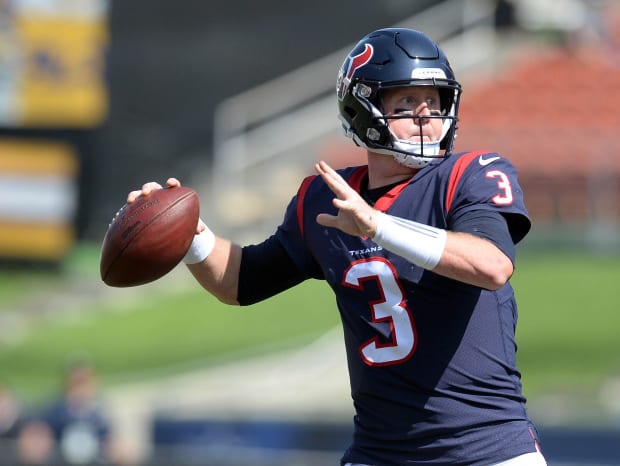
6. Dec. 20, 2015—Texans vs. Colts
- Score: Texans 16, Colts 10
- Significance: Texans defeat rival Colts on the road for the first time
Houston’s 14th attempt to win in Indianapolis started off poorly. A motivated third-string quarterback and a stifling defense, however, turned the game around and led to a surprising win. Quarterback Brandon Weeden led three scoring drives after being pressed into duty, and the defense held the Colts to 190 yards as the Texans won 16–10 to snap a 13-game losing streak in Indianapolis.
Weeden was seemingly the unlikeliest of heroes for the Texans, who were without starting quarterback Brian Hoyer because of a concussion and lost backup T.J. Yates to a knee injury just before halftime. Weeden was claimed off of waivers a month prior to his emergency appearance and came to the Texans with a career record of 5–19. Weeden started the following week in a 34–6 win over the Titans, pushing Houston closer to its third AFC South Division title in five seasons.
"He's a pro, he acts like a pro, he carries himself like a pro, he is a pro," coach Bill O'Brien said of Weeden. "Look, I'm not sure he has the whole offense down pat, but I think he has enough that he can go in there and function” (Marot, 2015).
After losing the first six games in Indianapolis by more than one possession, Houston began to close the gap with four one-possession losses over the next seven matchups. Going into the 2020 season, the Texans have three wins at Indianapolis.
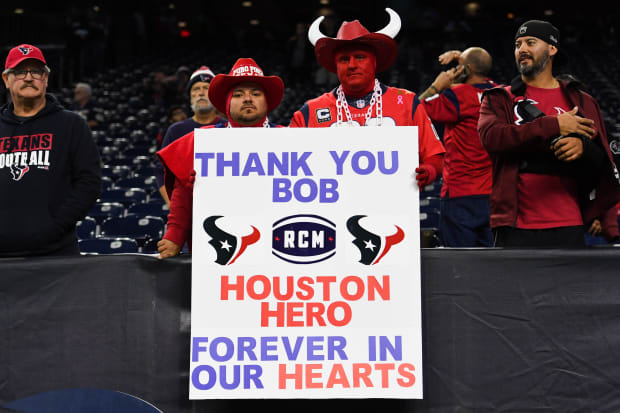
5. Nov. 26, 2018—Texans vs. Titans
- Score: Texans 34, Titans 17
- Significance: Texans secure emotional win three days after owner's death
Just three days after they were rocked by the death of owner Bob McNair, the Texans took the field for a Monday Night Football game against a division rival and made a statement. Running back Lamar Miller dashed 97 yards for a touchdown, and quarterback Deshaun Watson connected with Demaryius Thomas in the end zone twice as the Texans prevailed 34–17 for their eighth straight victory. That streak, along with Miller’s run, both set franchise records—a fitting tribute to the man who brought football back to Houston after the Oilers left for Tennessee in 1997.
"The one thing Mr. McNair wanted was a winner," said star defensive end J.J. Watt. "All he wanted was a winner. He wanted to win every week. He wanted a team that could win and bring a championship to this city. So to be able to win eight straight and to be able to win tonight for him was good, and we're going to try to keep doing that for him” (Rieken, 2018).
The Texans opened the 2018 season at 0–3 and would ultimately wind off nine straight victories to take command of the AFC South. They finished 11–5 as division champions but lost in the first round of the postseason.
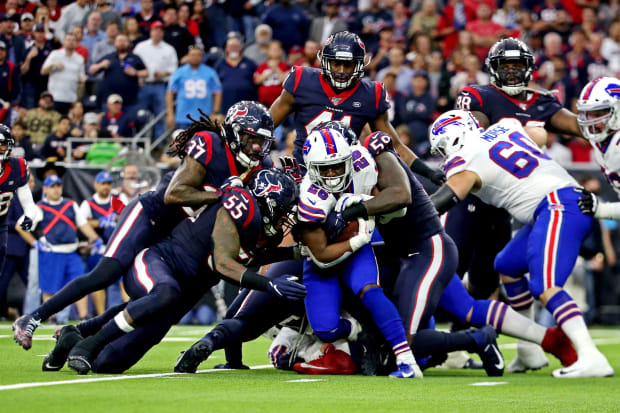
4. Jan. 4, 2020—Texans vs. Bills
- Score: Texans 22, Bills 19
- Significance: Texans outlast Bills in thrilling overtime playoff victory
The Texans certainly opened the 2019 playoffs with excitement. After falling behind 16–0, Deshaun Watson put the Texans on the board late in the third quarter, rushing for a 20-yard touchdown and then plunging in for a 2-point conversion to cut his team’s deficit in half. A Ka’imi Fairbairn field goal early in the fourth quarter combined with a five-yard touchdown pass from Watson to Carlos Hyde with 4:37 to play gave Houston its first lead of the game. All told, Watson led the offense to 19 straight points.
Buffalo got a field goal with five seconds left in regulation to push the game to overtime. Fairbairn finished the game with a 28-yard field goal in overtime to cap off a thrilling victory. To help set up that field goal, Watson spun out of a sack and completed a 34-yard pass to Taiwan Jones for what is, thus far, the defining play of his young career.
"The play he made at the end of the game—nobody makes that play," said defensive end J.J. Watt, who returned from an October pectoral injury and recorded a sack in the victory. "The guy's unbelievable. I'm very thankful and lucky to have him as my quarterback. That's why you play the whole game” (Rieken, 2020).
The rally from behind was not unusual for the Texans, who have trailed in three of their four playoff wins. There’d be no such luck the next week, when Houston lost 51–31 to the Chiefs, who would continue on to win Super Bowl LIV. That marked the second time the Texans lost in the playoffs to the eventual Super Bowl champion. The next task for Houston will be winning a second-round playoff game to advance to their first AFC Championship game.
3. Dec. 11, 2011—Texans vs. Bengals
- Score: Texans 20, Bengals 19
- Significance: Texans score late touchdown to clinch first AFC South Division championship
The stakes were staggering for quarterback T.J. Yates as he led the Texans offense onto the field with 2 minutes, 31 seconds to play in a Week 14 road matchup against the Bengals. Trailing 19–13, Yates faced an 80-yard field and needed a touchdown to clinch the first playoff appearance in team history. That’s quite a situation for a rookie who started the season as the third-string quarterback and was making just his second career start. But he delivered. It took 13 plays, but Yates connected with Kevin Walter for a six-yard touchdown in the waning seconds to pick up a monumental win for the franchise.
"It's pretty crazy," said Yates, who hit the 300-yard mark that day for the only time in his career. "A lot of people in this organization have waited a long time for this. This is a special day for this team and this organization” (Kay, 2011).
Yates was also without top receiving target Andre Johnson, who missed the game because of a strained hamstring. The defense, however, stepped up in the second half, holding the Bengals to just 81 offensive yards. Combined, the units helped push the Texans to a then-franchise-record seventh straight win, despite three lost fumbles.
The victory proved crucial, as the Texans would lose the final three games of the season, but they did post a first-round playoff win over the Bengals. Combined with a Titans loss that day, the win gave Houston its first of six AFC South titles.
2. Sept. 8, 2002—Texans vs. Cowboys
- Score: Texans 19, Cowboys 10
- Significance: Texans win first game in franchise history by beating in-state rival
It only took four plays for the Texans to score the first touchdown in franchise history. The Cowboys probably figured that was a fluke, but Houston didn’t let up, beating Dallas 19–10 in the “Texas Super Bowl” to become just the second first-year expansion team to win its first game. The Texans tried to hit it big on the first play, but instead came away with a 43-yard gain on a pass-interference penalty, and rookie quarterback David Carr fired a pass to tight end Billy Miller for a 19-yard touchdown three plays later.
“I think that put a little sting in the Cowboys,” said receiver Corey Bradford, the intended receiver on the opening play who also caught a 65-yard touchdown in the fourth quarter to break a 10–10 tie. “I think they said to themselves this ain’t no expansion team” (Carley, 2002).
The Cowboys had chances to make a comeback, but their offense repeatedly stalled in the fourth quarter—gaining just three offensive yards. Such a poor performance from the Cowboys led to headlines suggesting the team was “rising fast on the laugh track” and columns that read “fire everybody” and “deport the owner” (Galloway, 2002). The rest of the season wasn’t as exciting for the Texans, as they would lose the next five games as part of a 4–12 season, but the unexpected win to open the season will always be remembered. Dallas didn’t fare much better, losing four games in a row twice during a third straight 5–11 campaign.
The game also helped the Texans develop an identity as a defensive-minded group, and that attitude has continued on ever since. Many of the top players in franchise history have played on the defensive side of the ball, and since 2011, Houston has finished in the top 11 in scoring defense six times—including five seasons in which the Texans made the postseason.
1. Jan. 7, 2012—Texans vs. Bengals
- Score: Texans 31, Bengals 10
- Significance: J.J. Watt's interception breaks tied score as Texans claim first postseason victory
Defensive end J.J. Watt was a rookie, but he made himself known to the rest of the NFL during the first playoff game in Texans history. Watt intercepted a pass and rumbled 29 yards into the end zone to break a 10–10 tie. The offense did the rest as Houston turned what I consider the greatest win in franchise history into a 31–10 rout. That interception was named the team’s top play of all time prior to the 2019 season in a countdown of the team’s 100 greatest moments and was one of three picks in the game for Houston.
"I was really just trying to put my hands up and get in the way of the passing lane," Watt said. "It happened to kind of stick. I realized I had the ball so I just ran to the end zone just trying not to fall down” (Duncan, 2012).
Watt would go on to become the best defensive player in the NFL—winning Defensive Player of the Year awards in 2012, ‘14 and ‘15—but he wasn’t the only player responsible for getting past the Bengals. Running back Arian Foster scored twice and had 153 yards, and long-time receiver Andre Johnson caught 90 yards and a touchdown on five receptions from rookie quarterback T.J. Yates. Foster’s rushing total remains a single-game postseason record for the Texans, and he also owns the second- and third-best efforts.
Houston was unable to get past Baltimore in the next round, but has since made five more postseason appearances. The Texans are 4–6 in the playoffs, which includes two wins against the Bengals.
Honorable Mentions
For having only 18 years of history, the Texans have produced a number of memorable victories. The following are a handful of important wins that didn’t quite crack the top 10.
Sept. 9, 2013—Texans vs. Chargers
The Texans faced a 28–7 deficit in the third quarter, but stormed back to score 24 straight points, shocking the Chargers 31–28 for the biggest comeback win in franchise history. Houston’s kicker, Randy Bullock, knocked in a 41-yard field goal as time expired to secure the victory—an exclamation mark that kicked off a new campaign that would be marred by 14 straight losses to end the season.
Sept. 7, 2003—Texans vs. Dolphins
Houston opened the 2003 season as the NFL’s biggest underdog with a matchup against the Dolphins, but just like they did in their inaugural season the year before, the Texans pulled off a season-opening upset. Kris Brown kicked five field goals for Houston, including the game-winning boot with 25 seconds to play, and the Texans walked away with a 21–20 victory. Miami was expected to contend for a spot in that year’s Super Bowl and was favored to win the opener by two touchdowns. The Dolphins hadn’t lost a season-opener since 1991.
Dec. 26, 2004—Texans vs. Jaguars
Coming into the second-to-last game of 2004, the Texans needed a win for a chance at a .500 record and the Jaguars needed a win to stay in playoff contention. Despite having less at stake, Houston seemed more ready to play, blanking Jacksonville 21–0 for the first shutout in franchise history. The Texans' defense was stifling, holding the Jaguars to just 126 offensive yards. At the time, that was the fewest yards an opponent had gained against the Texans; Jacksonville has since beaten that record twice, gaining 117 yards in 2012 and 119 in ‘18.
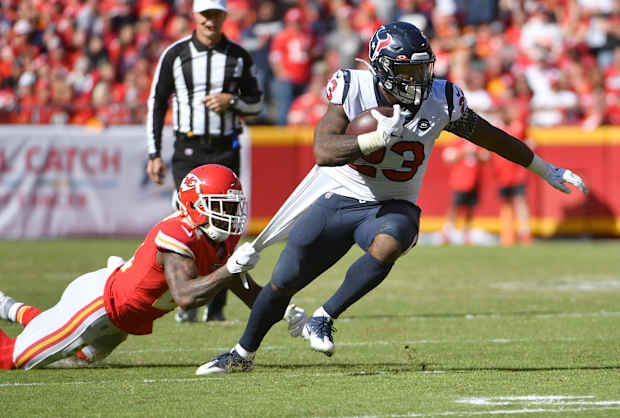
The Greatest Comeback Wins in Texans History
The Texans have come from behind to win several games throughout their history, but the greatest comeback came against the Chargers on Sept. 9, 2013. On that day, Houston overcame a 28–7 deficit by scoring 24 unanswered points in the third and fourth quarters of a 31–28 victory. The largest deficit ever overcome by the Texans was a 25-point margin they erased in the fourth quarter of a 38–36 loss to the Titans on Oct. 21, 2007.
Houston has overcome at least a two-touchdown deficit and won 11 times in history; details of those games are listed below.
Best Texans Comebacks
Works Cited
Bohls, K. “A Star in the Making.” Austin American-Statesman. pp. C1-C5. Oct. 2, 2017. Retrieved from
Newspapers.com on April 16, 2020.Carley, J. “Bradford learned lessons well.” Fort Worth Star-Telegram. pp. CC4. Sept. 9, 2002. Retrieved from Newspapers.com on April 17, 2020
Duffey, G. “Texans triumph over Colts” Austin American-Statesman. pp. C6. Dec. 25, 2006. Retrieved from Newspapers.com on April 16, 2020.
Duncan, C. “Texans make history, while season’s history for Bengals.” Austin American-Statesman. pp. C1-C7. Jan. 8, 2012. Retrieved from Newspapers.com on April 16, 2020.
Galloway, R. “Cowboys rising fast on the laugh track.” Fort-Worth Star Telegram. pp. CC1-CC4. Sept. 9, 2002. Retrieved from Newspapers.com on April 17, 2020.
Kay, J. “Yates, Texans clinch first playoff berth with last-second victory.” Austin American-Statesman. pp. C1-C6. Dec. 12, 2011. Retrieved from Newspapers.com on April 17, 2020.
Marot, M. “A Day of Firsts.” Austin American-Statesman. pp. C1-C4. Dec. 21, 2015. Retrieved from Newspapers.com on April 16, 2020.
Rieken, K. “Texans, Watson roll over Titans.” Austin American-Statesman. pp. C5. Oct. 2, 2017. Retrieved from Newspapers.com on April 16, 2020.
Rieken, K. “Texans honor late owner with key victory,” Odessa American. pp. B1-B3. Nov. 28, 2018. Retrieved from Newspapers.com on April 16, 2020.
Rieken, K. “Texans beat Bills in OT, 22-19.” Longview News-Journal. pp C1-C2. Jan. 5, 2020. Retrieved from Newspapers.com on April 17, 2020.
Thursday, 23 July 2020
New on SI: Top 5 Running Backs in Detroit Lions Team History
This article covers the greatest running backs in Lions history. For each highlighted player, we'll review statistics, accolades and awards, and their impact on the franchise.
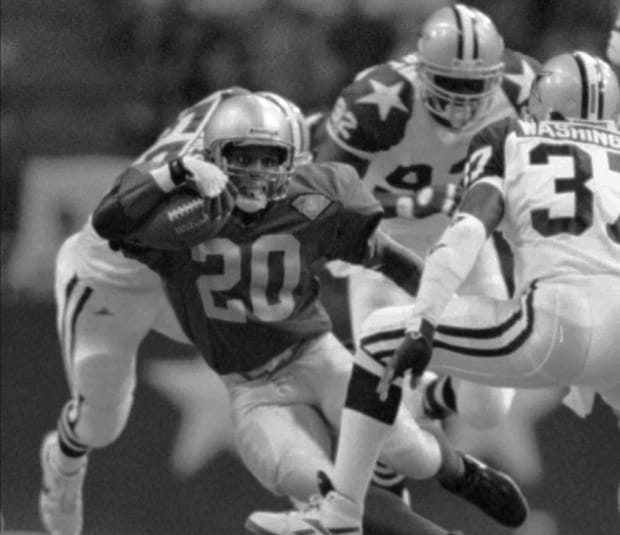
Greatest Running Back in Lions History
The Lions have a paltry history when it comes to running back success. Despite being the fifth-oldest currently operating franchise in NFL history, having been founded in 1930, the team has had only 18 seasons with a 1,000+ yard rusher. Those 18 seasons were produced by six total players, with 10 of those seasons coming from Barry Sanders—a man who many believe may be the greatest running back of all time.
Selection Criteria
The Lions have had only two running backs inducted into the Hall of Fame who spent their entire careers in Detroit. Choosing other players who are worthy of being on this list was a difficult task; few other players produced incredible rushing stats.
Because of this, for the remaining slots on the list, I decided to look at the contributions the players made to the team as a whole, not just their rushing stats. Therefore, this list includes running backs who may have excelled in other areas of the game such as receiving, scoring or playing other positions. They were chosen based on their accolades, records and impact on the franchise.
5. Cory Schlesinger (1995–2006)
Cory Schlesinger was drafted by the Lions in the sixth round of the 1995 NFL Draft. Schlesinger's rushing statistics are far from impressive, ranking 68th in Lions franchise history for career rushing yards, but his blocking abilities as a fullback and special teams player are why he makes this list. He blocked for runners like Barry Sanders during some of his greatest seasons, including two 1,500-yard seasons and a 2,000-yard season.
Schlesinger was a powerful and nasty blocker in the NFL. He was known for frequently breaking his face masks due to his physical play-style. His tenacity was evident early in his career on special teams. He led in special teams tackles in 1996, and between 1995 and 2001 he recorded 118 special teams tackles, more than anyone on the team. Schlesinger was a fantastic blocker as well, but due to the Lions using more three-wide receiver sets, he was reduced to starting his career as a special teams player. In 1999, he became the Lions' starting fullback and would remain the starter for the rest of his career.
After Barry Sanders retired, Schlesinger stepped up in more ways outside of just blocking. He became a strong checkdown option in the passing game, recording a 60-reception season for 466 yards in 2001.
He was a fan favorite and was loved by his teammates as well. He was voted the Lions' MVP in 2003 by his teammates. He wasn't as respected by the league, however, earning only three alternate selections to the Pro Bowl in his career. Regardless, Schlesinger did an amazing job at his blue-collar position, pounding opponents for one of the best rushing teams in the NFL over the course of his career.
Jersey Number: 30
Franchise Stats
- 473 rushing yards
- 5 rushing touchdowns
- 1,445 receiving yards
- 36 tackles
Accolades
- 3x Alternate Pro Bowl selection
- Sports Illustrated All-Pro 2001
Trivia: Schlesinger is rumored to have broken over 200 face masks during his football career.
4. Mel Farr (1967–1973)
Mel "Superstar" Farr is a prime example of incredible skill with unfortunate circumstances. He was selected by the Lions seventh overall in the 1967 NFL Draft. Farr was an incredible athlete but was injured, or recovering from injury, nearly his entire career. His injuries were one of the reasons he played for only seven seasons. In 1968, he led the league in rushing yards with 490 yards before an injury ended his season early.
Farr began his career with amazing promise, winning the Rookie of the Year award with 860 rushing yards. He also led the Lions in receptions that season with 39. The following year he would lead the league in yards per touch with 6.4. On three separate occasions, he finished his seasons in the top 10 in rushing yards per game.
Farr had to deal with two major knee injuries, both requiring surgery, before he returned for a second time to football in 1970. That season was the only one in his career in which he started every single game of the year. He earned a Pro Bowl selection by amassing 930 yards from scrimmage and 11 touchdowns.
Farr retired from football after rumors of being traded to the Oilers surfaced in 1973. He went on to invest his savings in opening a car dealership in Oak Park, Michigan. He had great success with the business, eventually expanding to 14 dealerships throughout Michigan, Ohio, New Jersey, Maryland and Texas.
Jersey Number: 24
Franchise Stats
- 3,072 rushing yards
- 26 rushing touchdowns
- 1,374 receiving yards
- 10 receiving touchdowns
Accolades
- 1967 NFL Rookie of the Year
- 1967, 1970 Pro Bowl selection
Trivia: Farr was a backup vocalist for Marvin Gaye's song, "What's Goin On."
3. Billy Sims (1980–1984)
Billy Sims was selected first overall by the Lions in the 1980 NFL Draft. He had come off of an impressive college campaign at Oklahoma, where he was a two-time All-American and won the Heisman in 1978. His success continued into the NFL where he put together the greatest rookie season for a running back in Lions history.
In his first game, Sims ran the ball 22 times for 153 yards, an amazing 6.9 yards per carry. He also added 64 yards on two catches and three rushing touchdowns. It was clear he would be destined for greatness. He won the Rookie of the Year award after amassing an incredible 1,924 total yards and 16 total touchdowns in his first season. He led the league in rushing touchdowns with 13, and he was one of three Lions players who were selected to the Pro Bowl that season.
Sims continued his impressive play in Detroit for years, earning Pro Bowl selections the following two seasons as well. Despite injuries, he was able to amass 4,419 yards and 42 total touchdowns in only 52 games. In fact, he averaged over 100 total yards per game every single season he played. He was an incredibly exciting player to watch, with memorable plays such as the "Karate Kick." Sims ran a toss play to the right, and as he accelerated he tried to jump over a defender, using his back as leverage and kicking a second defender, Steve Brown, in the face. It's still one of the most memorable plays in Lions history.
One reason why Sims isn't higher on this list is due to the brevity of his career. Unfortunately, his career was cut short on Oct. 21, 1984, while playing against the Vikings. He was running the ball to the right and, with his right leg planted, a Vikings defender jumped on his back causing Sims's knee to blow out. Despite two years of rehabilitation, Sims never was never able to return to the league.
Sims finished his career as the leading rusher for the Lions in both yards and touchdowns, along with many other rushing records. He still ranks second in all of those categories, with 5,106 total rushing yards and 42 rushing touchdowns.
Jersey Number: 20
Franchise Stats
- 5,106 rushing yards
- 42 rushing touchdowns
- 2,072 receiving yards
- 5 receiving touchdowns
Accolades
- 1980 Rookie of the Year
- 1980 All-Rookie Team selection
- 1980–1982 Pro Bowl selection
- Jersey number retired by the Lions
Trivia: Sims's jersey number is retired as a trio of great players because both Barry Sanders and Lem Barney also wore the number.
2. Doak Walker (1950–1955)
Doak Walker joined the Lions via trade in 1950. Coming into the league at only 5'11" and 173 pounds, many NFL executives believed he was too small to be successful on the field, despite having won the Heisman Trophy in college. However, Walker instantly became the team's ultimate Swiss army knife. Not only did he run the ball, but he also was a receiver, kicker, punter and return man.
In his first season, Walker amassed 1,262 total yards, 11 total touchdowns and an additional 62 points between field goals and extra points. Of the team's 321 points scored on the season, Walker scored 128. He finished second overall in rushing and receiving yards but led the team in scoring. He even played defense and recorded an interception.
Walker went on to be an incredibly successful offensive weapon for the team. Over his six years with the franchise, he had over 1,000 all-purpose yards in three different seasons, and 978 in a fourth. Because of his vast range of abilities, none of his individual skills seems to dominate statistically, but his scoring was inarguably strong. He accumulated 534 points during his career along with two scoring titles. That means because he played 12-game seasons, he averaged 89 points per season and 7.9 points per game.
Walker also played a huge part in winning two NFL Championships with the Lions in 1952 and 1953. In 1952, he rushed for 97 yards and a touchdown on only 10 attempts. He also had two receptions for 11 yards. In 1953, his yardage was slim, but he made up for his lackluster performance with his scoring ability. He scored the game's first touchdown and kicked the game-winning extra point. He had one rushing touchdown, a field goal and two extra points to score 11 of the team's 17 points.
Walker was selected to five Pro Bowls in his six-year career and was a First-Team All-Pro four times. He led the league in scoring twice. He was elected to the Pro Football Hall of Fame in 1986.
Jersey Number: 37
Franchise Stats
- 61 career starts (played in a total of 67 games)
- 1,520 rushing yards
- 12 rushing touchdowns
- 2,539 receiving yards
- 21 receiving touchdowns
- 284 punt return yards
- 1 punt return touchdown
- 968 kick return yards
- 1,956 punt yards
- 49 field goals made
- 183 extra points made
Accolades
- 1950–1951, 1953–1955 Pro Bowl selection
- 1950–1951, 1953–1954 First-Team All-Pro selection
- 1950, 1955 Scoring Champion
- 1952–1953 NFL Champion
- 1986 Hall of Fame inductee
Trivia: Walker is one of only three players in NFL history with at least 10 rushing touchdowns, 20 receiving touchdowns, an interception and a punt return touchdown.
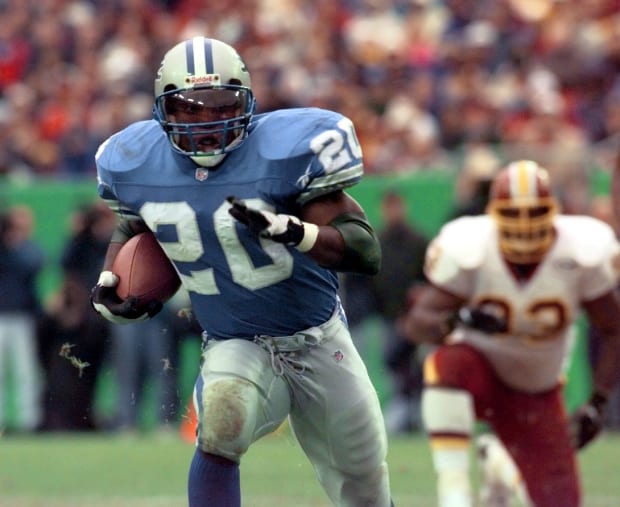
1. Barry Sanders (1989–1998)
Barry Sanders was selected third overall in the 1989 NFL Draft. Coming off of a Heisman-winning season at Oklahoma State, Sanders' explosive career started three days after he signed his contract. His first play from scrimmage was an 18-yard run, finishing the game with 71 yards and a touchdown on only nine attempts. He ended his rookie season only 10 yards shy of leading the league in rushing, finishing with 1,470 rushing yards, 14 rushing touchdowns and 282 receiving yards. He won the Rookie of the Year award for his incredible season.
In his 10 seasons in Detroit, Sanders' dominance was consistent and unwavering. He was selected to 10 Pro Bowls and was a First-Team All-Pro selection six times. He never rushed for fewer than 1,000 yards and only had fewer than 1,500 total yards from scrimmage once. He led the league in rushing four times and total scrimmage yards twice. When he retired he averaged 99.8 yards per game, good for second all-time in NFL history behind only
Jim Brown.Sanders retired at the prime of his career, after only his tenth season. The year prior he had rushed for nearly 1,500 yards, and the season before that he became only the third man in NFL history to rush for 2,000 yards, earning him both the MVP award and the Offensive Player of the Year award in 1997. When he retired, Sanders was only 1,457 yards away from being the NFL rushing leader for a career. It was a decision that sent shock waves through the sports world. In his retirement letter, Sanders stated, "The reason I am retiring is very simple: My desire to exit the game is greater than my desire to remain in it."
Naturally, this shocking decision led many to wonder if his stated reasons were entirely truthful. Since his retirement, some have blamed the Lions organization for not surrounding Sanders with enough talent to make him want to stay. During his 10 seasons in Detroit, the team had a top 10 defense only once. The team finished with a winning record only five times and won their division only twice. Perhaps most disappointing of all, the Lions went to the playoffs five times during Sanders' career—but won only one game. The world may never know the true reasons that led to his retirement. Some of his teammates even tried to convince him to stay, including Tracy Scroggins.
On the flight home from his final game, Sanders had told Scroggins that he planned to retire. Scroggins later said, "I tried my best to talk him out of retiring. I did everything in my power. I gave him the spiel about you’re so close to breaking the record, you’re only 1,400 and some change away from breaking Walter Payton’s (all-time rushing) record. Stay one more year and break the record."
Unfortunately for the team, Sanders retired anyway. It was well known that records were of little interest to him. For example, at the end of his rookie season, Sanders was only 10 yards away from earning the rushing title for the year. With the game in hand, he told his coach to send in the backup. He said, "Coach, let's just win it and go home."
Sanders was always the best of the best when he stepped on the field. He was on pace to shatter almost every single rushing record to date until he retired early. He was a powerful back who was hard to bring down, but he was also incredibly shifty to the point of danger for defenders. In the regular-season opener of 1995, Hall of Fame cornerback Rod Woodson of the Steelers attempted to tackle Sanders in the open field. Sanders juked past him and Woodson tore his ACL, ending his season. Sanders was an incredible athlete who was awe-inspiring to watch.
Jersey Number: 20
Franchise Stats
- 153 career games
- 15,269 rushing yards
- 99 rushing touchdowns
- 352 receptions
- 2,921 receiving yards
- 10 receiving touchdowns
Accolades
- 1989 NFL Rookie of the Year
- 1989–1998 Pro Bowl selection
- 1989–1991, 1994–1995, 1997 First-Team All-Pro selection
- 1994, 1997 NFL Offensive Player of the Year
- 1997 MVP
- 2004 Hall of Fame inductee
- Hall of Fame 1990s All-Decade team
- NFL 100 All-Time Team
Trivia: Sanders didn't want to accept his Heisman Trophy award on national TV. He did so only after his linemen, who blocked for him that season, expressed how important it was to them.
Honorable Mentions
No top five list is complete without a set of honorable mentions, or those players who didn't quite make the cut. The list is arranged chronologically, from most recent to oldest.
Reggie Bush (2013–2014)
Like James Stewart, Reggie Bush went to Detroit after spending the majority of his career elsewhere. The former Saint joined the Lions in 2013 and started all 14 games that he played in. He rushed for 1,006 yards and four rushing touchdowns with a respectable 4.5 yards per carry. He also added a pass-catching ability, catching 54 passes for 506 yards and three touchdowns. In addition, he led all offensive players, including Calvin Johnson, in all-purpose yards that season with 1,512.
Bush's playmaking ability helped lead the Lions to have the sixth-best offense in the NFL that year. His following season was not nearly as productive, however, as he had only 76 carries in 11 games. Despite his one-hit-wonder year with the Lions, he's still only one of six men to ever rush for 1,000 yards for the franchise.
Jersey Number: 21
Franchise Stats
- 25 games
- 299 carries
- 1,303 rushing yards
- 6 rushing touchdowns
- 94 receptions
- 759 receiving yards
- 3 receiving touchdowns
Trivia: Bush was only the second player in Lions' history to ever record a season with both 1,000 rushing yards and 500 receiving yards. The other player was Billy Sims.
James Stewart (2000–2002)
James Stewart began his career as a perennial backup with the Jaguars, starting only 34 games in five years in Jacksonville. In 2000, Stewart joined the Lions and started all 16 games for the first time in his career. He had more carries that season than any other year, carrying the ball 339 times for 1,184 yards and 10 rushing touchdowns. It was the best statistical season of his career.
Stewart played for the Lions for two more seasons, amassing a total of 713 carries for 2,890 yards and 15 rushing touchdowns. He was one of the lone bright spots on a roster that consistently ranked near the bottom of the league in both offense and defense. During his time in Detroit, the team won only 14 games in three seasons.
Still, Stewart ranks in the top ten in franchise history for rushing yardage and is one of only six men to ever run for 1,000 yards in a season. He's also one of only three backs to rush for 1,000 yards more than once for the franchise (the others are Billy Sims and Barry Sanders).
Jersey Number: 34
Franchise Stats
- 41 games
- 713 carries
- 2,890 rushing yards
- 15 rushing touchdowns
Trivia: Stewart's career was ended when he shattered his shoulder during a preseason game in 2003. The hit was part of a bounty system implemented by Coach Greg Williams of the Bills that paid players to injure their opponents.
Nick Pietrosante (1959–1965)
Nick Pietrosante was selected by the Lions sixth overall in the 1959 NFL Draft. As a fullback, he started only five games that season, amassing 447 yards on 76 carries and three rushing touchdowns. His league-leading 5.9 yards per carry were enough to earn him the Rookie of the Year award. He followed that season up with two Pro Bowl seasons, rushing for 1,713 yards and 13 rushing touchdowns over that span.
Pietrosante played with the Lions for seven years in total. He accumulated over 5,000 all-purpose yards with the team and 30 total touchdowns. When he left the team, he had set a then-franchise record of 3,933 rushing yards.
Jersey Number: 33
Franchise Stats
- 88 games
- 938 carries
- 3,933 rushing yards
- 28 rushing touchdowns
Accolades
- Rookie of the Year
- 1960–1961 Pro Bowl selection
Trivia: Coach Vince Lombardi once said, "[Pietrosante] shall be a great one someday. He is very tough to bring down."
Lions 1,000 Yard Rushers
Lions Career Rushing Leaders
Is Barry Sanders the GOAT?
Barry Sanders is often in the conversation for the greatest running back of all time along with Jim Brown, Walter Payton and Emmitt Smith. All four exhibited incredible skill throughout their careers and hold or have held franchise and NFL rushing records. While the argument may never be definitively settled, here are a few comparisons, as well as statistics, that may clarify the relevant points.
Which NFL Running Back Played Longest?
At first glance, it may appear that Smith is the greatest running back of all time. He leads the four backs in rushing yards, rushing touchdowns and even receptions. However, Smith played 36 more games than the next leading rusher and nearly twice as many games as Brown. The saying goes, "The best ability is availability." Running backs are players who take more hits than most positions in football, making them more susceptible to injury and more likely to have much shorter careers on average than other positions. Below are the number of games missed by each of the four backs:
- Emmitt Smith: Missed 14 games in his 15-year career. All of his seasons were 16-game seasons, which means that he missed only 5.8% of his career games. His longevity and health are what helped him lead in most categories, allowing him to play football until the age of 35.
- Walter Payton: Missed four games during his career, with a strike-shortened nine-game season in 1982 and a strike-shortened 15-game season in 1987. Of his 194 possible career games, he played in 190, meaning he missed only 2.0% of his career games. Payton played until the age of 33.
- Barry Sanders: Missed seven games in his NFL career. Of his 160 possible games, he only missed 4.3% of his total games. Sanders' career only lasted 10 years however, as noted above. With 73 fewer games than Smith and 37 fewer than Payton, it's incredible to see he was only a mere 3,086 yards from the all-time rushing yardage title.
- Jim Brown: Never missed a single game or start in his entire career, with a total of 118 games. Brown was the epitome of durability and health; he was a workhorse back who was always available and ready to play. Despite averaging 262 carries over 13.1 games a season, Brown never had to sit out of a game due to injury. His career lasted only nine seasons, and he left the game in his prime, just like Sanders. Brown had just capped off his best statistical season and earned the MVP award before he retired. Had his career continued, who knows what could have been?
It's clear that all four players were incredibly durable, and the shortened length of both Sanders' and Brown's careers were due to personal reasons, not injury or diminished skill. Both Sanders and Brown have better averages than Payton and Smith on yards per carry and yards per game, as shown below, so it's easy to argue they could have surpassed the other two in their totals had their careers lasted longer.
Who Are the Best Running Backs of All Time?
Comparing Running Backs Across Different Eras
The four backs played in three separate eras of football, with Smith and Sanders in the 1990s, Payton in the '70s and '80s, and Brown in the '50s and '60s. All three eras boasted different styles of play, and many will argue that this either strengthens or diminishes each player's claim to the GOAT status. Below are the average yards passing versus rushing during each players' career, as well as accolades they earned throughout their career:
- Jim Brown played in a time when running the ball dominated the league. During his career, the league averaged 176.8 passing yards to 131.8 rushing yards. The league also averaged 26.6 pass attempts to 32.3 carries. This means the league ran an average of 58.9 offensive plays during Brown's career, running the ball 54.8% of the time, accounting for 42.7% of the league's total offense. During his nine-year career, he led the league in rushing yards eight times, rushing touchdowns five times, carries six times and all-purpose yards six times. Brown also led the league in yards per attempt twice.
- Walter Payton entered the league as the offense began running more plays. During his career, teams averaged 186.2 passing yards versus 131.8 rushing yards and 29.8 pass attempts versus 33.1 rushing attempts. This means the NFL ran an average of 62.9 offensive plays during Payton's career, running the ball 52.6% of the time, accounting for 40.2% of the league's total offense. During Payton's 13-year career, he led the league in attempts four times, rushing yardage once, rushing touchdowns once and total yardage twice.
- Barry Sanders played in the '90s when offenses became even more passer-friendly. During his career, the NFL averaged 32.2 pass attempts versus 28.0 rushing attempts, with rushing accounting for only 46.5% of the total play calls. The NFL also averaged 204.1 passing yards versus 110.4 rushing yards, with rushing only accounting for a mere 35.1% of all yardage. The Lions followed this trend. Despite Sanders never leading the league in attempts or total touches, he led the league in rushing yards four times, rushing touchdowns once, total scrimmage yards twice and total touchdowns twice.
- Emmitt Smith played in the same era as Sanders, continuing on into the early 2000s. During his career, the NFL averaged 32.4 pass attempts versus 24.0 rush attempts, with rushing accounting for 42.4% of all play calls. The NFL also averaged 205.2 passing yards versus 111.3 rushing yards, with rushing accounting for only 35.1% of all yardage. In Smith's 15-year career, he led the league in attempts three times, rushing yardage four times, rushing touchdowns three times, total touches four times, total scrimmage yards twice and total touchdowns three times.
Comparing Smith, Payton, Sanders and Brown
It's clear that as the years went by, the NFL has turned more and more into a passing league. Brown played in a day when rushing accounted for over half the play calls and 42.7% of the league's total offense. The NFL during Payton's era saw an identical breakdown of run calls, but the rushing efficiency dipped slightly, with only 40.2% of total yards coming from running plays. Both Sanders and Smith saw the league turn to pass as a first option, but both saw exactly 35.1% of all yards coming from runs during their careers. However, Sanders averaged 4.1% more run calls during his time, meaning the league was less effective rushing the ball than during Smith's entire career.
Regardless of the era in which each player played, no one dominated the league like Brown did. Despite each player setting and holding records, Brown led the league in every major statistical category for more than half of his career. In fact, Brown led the league in yardage eight times and rushing touchdowns five times, equalling the total of the other three backs combined in both categories. With the league running the ball more than half the time and throwing for less yardage than any other era, it's safe to say that defenses knew Brown was going to get the ball, making his efforts even more impressive.
Who Has the Most NFL Accolades?
Each of the four backs had Hall of Fame–worthy careers, setting records and winning plenty of games along the way. Their dominance led to them all receiving great honors and accolades during their careers. Below is a list of each player's accolades and NFL career records:
Emmitt Smith (15 seasons):
- NFL Offensive Rookie of the Year
- 8x Pro Bowler
- 4x First-Team All-Pro
- 1x Bert Bell Award recipient
- 1x NFL MVP
- 3x Super Bowl Champion
- 1x Super Bowl MVP
- Hall of Fame
- Pro Football Hall of Fame First-Team All-1990s Team
- NFL 100 All-Time Team
- NFL Record: 18,355 career rushing yards
- NFL Record: 4,409 career rushing attempts
- NFL Record: 164 career rushing touchdowns
Walter Payton (13 seasons):
- 9x Pro Bowler
- 5x First-Team All-Pro
- 1x Walter Payton Man of the Year
- 1x Bert Bell Award recipient
- 1x Offensive Player of the Year
- 1x NFL MVP
- 1x Super Bowl Champion
- Hall of Fame
- Pro Football Hall of Fame First-Team All-1970s Team
- Pro Football Hall of Fame First-Team All-1980s Team
- NFL 100 All-Time Team
Barry Sanders (10 seasons):
- NFL Offensive Rookie of the Year
- 10x Pro Bowler
- 6x First-Team All-Pro
- 2x Bert Bell Award recipient
- 2x Offensive Player of the Year
- 1x NFL MVP
- Hall of Fame
- Pro Football Hall of Fame First-Team All-1990s Team
- NFL 100 All-Time Team
Jim Brown (9 seasons):
- NFL Offensive Rookie of the Year
- 9x Pro Bowler
- 8x First-Team All-Pro
- 1x Bert Bell Award recipient
- 3x NFL MVP
- 1x NFL Champion
- Hall of Fame
- Pro Football Hall of Fame First-Team All-1960s Team
- NFL 100 All-Time Team
- NFL Record: 104.3 yards per game
Who Is the Greatest Running Back of All Time?
While longevity aided both Smith and Payton's records, no player did more with the ball than Sanders and Brown. Brown slightly edges out Sanders in yardage and scoring ability, but it could be argued that since Sanders played two decades later, he faced larger, stronger and more athletic players. Brown dominated the league like no other and earned accolades as a top player for nearly every single season he ever played. He also has as many MVPs as the other three backs combined. While the debate will continue to rage on, I think it's safe to say that Brown is the greatest, with Sanders trailing ever so slightly behind. Regardless, these four backs will remain legends in the history of football forever.
New on SI: The 2019-2020 NFL Octopus Awards and Year in Review
Last season the octopus went from an obscure internet discussion topic to a high six-figure liability for one casino during the Super Bowl. Let's look back and dish out awards for the best octopi of the season.
A lot can happen in one year. Thinking back to what life felt like on that February night when the Chiefs won the Lombardi Trophy in Miami—somehow not even six months ago—that is, perhaps, the understatement of the century. But travel back in time with me a bit here.
Last offseason I published an article
introducing the octopus, declaring it The MMQB’s “favorite new statistic.” (I think editors changed it to something less all-encompassing.) Over the next year … well I don’t want to say it took over the internet, but it certainly made a few ripples. And then my silly creation was debated on TV. And then actual human beings who run actual sports books in real casinos were more worried about it during the Super Bowl than they were about the coin toss, the margin of victory or the jersey number of the player who scored the first touchdown.One year and four months later, welcome to the Inaugural NFL Octopus Awards. Sure, it’s July. But truly there’s no better time for a Year in Review type column. The original publish date of this post was far from the only casualty of the sports calendar this past March, with slightly more important things in the news. And while the news cycle remains unrelenting, with major team sports returning and the NFL making real plans to get players into training camps, we are ready to celebrate some football frivolities as well.
Someday maybe we’ll have a black-tie gala with tuxedos and oversized fancy envelopes, but in these times I guess we’ll just stick with an article. Let’s look back at the best of the octopus from the 2019 NFL season. And spoiler alert: We just might dip into the calendar year 2020.
***
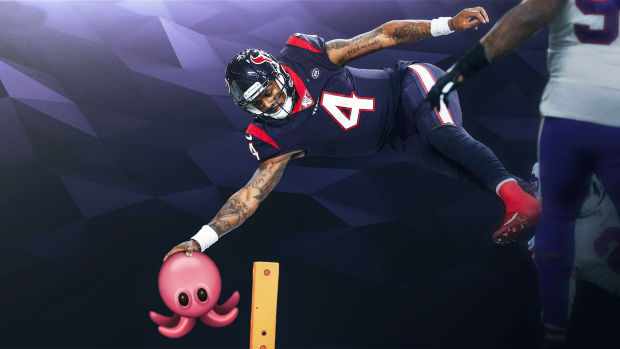
Let’s start with the basics—like, say, what is an octopus? An octopus is when the same player who scores a touchdown also scores the ensuing two-point conversion. No, being a quarterback and throwing the ball for a TD does not count. You must score all eight points yourself.
If you’re new around here, I recommend last year’s post as a starting point, especially if you want answers to trivia questions like, “Who had the first octopus in the playoffs?” [a Pro Football Hall of Famer!] or “Has anyone ever had two octopi in a single game before?” [actually, yes, because the kicker was hurt!].
Trust me, last year’s post has more info than you really need. But now I’ll dive into what’s new since then, and update some of the all-time leaderboards too.
After the initial article, the octopus movement sat dormant until the first full night of the preseason. On August 8, I put out the call:
A mere 16 minutes later, I got the tweet. “Nick Brosette just did it.” Sweet! Who is Nick Brosette? He was a 1,000-yard rusher as a senior at LSU, then an undrafted free agent on the Patriots. And on this night, with the Pats up 20-0 on Detroit, he scored a touchdown in the third quarter, and then caught a pass in the flat from Jarret Stidham for a two-point conversion that must have made sense to Bill Belichick at the time. It was the first octopus of 2019. And perhaps the most important part: I didn’t even have to watch that game. The octopus gang was on the case, reporting back.
This thing might have legs … err … tentacles.
Fast forward through the rest of the season, 11 NFL octopi later (plus more in college football), and we’re onto the Super Bowl. There’s just something fun about rooting for an octopus. That moment when the offense lines up to go for two and your eyes instinctively look for whoever scored the touchdown. Boy it would be fun to be able to bet on this in the Super Bowl, wouldn’t it? They have props for everything else, so why not this?
Well luckily the fine folks at Caesar’s agreed, and that was that. They created a prop bet. An actual prop bet. This silly thing that I thought of, crowd-sourced to get a name for and then tweeted about for a few months was on the board. An actual oddsmaker had to sit down and think about what the line should be! Turns out the opening line was +1200 yes (so bet $10 to win $120 if there is an octopus) and -3000 no (so bet $300 to win $10 if there isn’t).
After that, actual human beings with their own free will and money they could have spent on food, shelter, football jerseys or, I don’t know, rare coins, walked up to casino counters and said, “Hi, $20 on the octopus please.”
The hype machine was just beginning. I was not surprised to see the octopus discussed in places like my pal Michael Beller’s podcast for The Athletic. I was surprised when I was sent a screenshot of them debating the octopus on ESPN’s gambling show The Daily Wager. Real gambling analysts talking about my baby the week of the Super Bowl? An illustrated octopus on the screen? Yes to both.
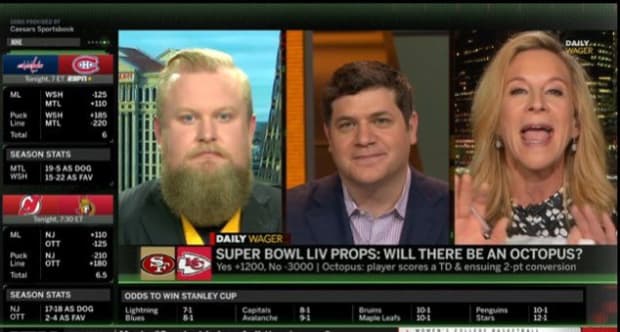
People were not just talking, but betting. Jeff Davis, the Director of Trading at Caesars, told me they got 25 times as many bets on yes as on no. Because of course. Who would want to bet against it, especially at that price? Apparently, people liked the octopus so much Caesars had to move the odds to +950.
And here’s the news we woke up to on Super Bowl morning: Ben Fawkes, the editor of ESPN’s Chalk, reported that Caesars would’ve suffered a “high six-figure loss” if it had hit. Daily Wager host Doug Kezirian reported it was their biggest liability of any bet on the board.
So it’s safe to say they were thinking about it as much as I was.
The story pretty much ends there, for now. There was no octopus in the Super Bowl, but that’s OK. There’s always next year. Because one thing I know for sure: This thing isn’t going away.
***
And now let’s look back and dish out our 2019-20 Octopus of the Year Awards, and then I’ll update the all-time individual leaders, all-time team leaders and the full list of all 151 octopi since the NFL instituted the two-point conversion in 1994.
Noted Octopi
Because—as you can likely tell—I am completist by nature, I will acknowledge all 11 octopi from last year. They all deserve at least to be mentioned, so consider them noted.
Le’Veon Bell (Jets) Week 1
Ryan Griffin (Jets) Week 8
Dede Westbrook (Jaguars) Week 13
Zach Pascal (Colts) Week 14
Cole Beasley (Bills) Week 14
Congratulations, all.
Honorable Mention Octopi
Christian McCaffrey (Panthers) Week 8: This one is an honorable mention partly because it’s Christian McCaffrey, but mostly because it was a 40-yard touchdown run against the 49ers’ stacked defense. The 49ers only allowed three rushing touchdowns all season of longer than five yards—McCaffrey, a 22-yard Kyler Murray run and an eight-yard Robert Woods run. That’s impossible.
Patrick Laird (Dolphins) Week 13: This deserves distinction for a couple reasons. Not only was this during Miami’s stunning upset over the Eagles, but it happened to be the only touchdown of Laird’s rookie season. Listen, I wish nothing but the best for Laird. I hope he goes on to have a long and prosperous NFL career. Truly. But if he finishes his career with exactly eight points scored and they all came on an octopus. Well… there are worse claims to fame.
Davante Adams (Packers) Week 12: Adams did his in prime time, on Sunday Night Football. (Where are you when I need you, NBC researchers?) He loses some points because it was only a two-yard TD catch and the Packers were blown out 37-8 by the 49ers in a preview of the NFC championship game. But thanks to his octopus on New Year’s Day 2017, Adams became the 24th player with multiple octopi in his career. Honorable indeed.
Octopi of the Year
Third Place: Todd Gurley (Rams) Week 15
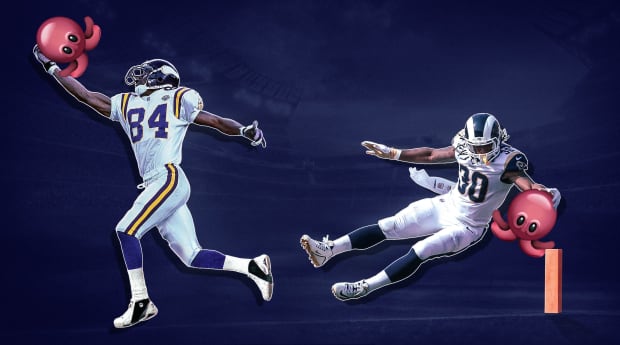
To be fair, this is more a lifetime achievement award. With the Rams trailing the Cowboys by 30, Gurley turned an otherwise unremarkable touchdown into an octopus for the record-setting fourth time in his career. When last year’s story was published, Gurley shared the record with Randy Moss and I speculated who would become the Octopus King. We didn’t have to wait long for the answer. For now, Gurley wears the crown.
Second Place: Emmanuel Sanders (Broncos) Week 2
Speaking of games that feel like they were ages ago, this one was before Sanders’s trade to the 49ers and it was a brief moment of jubilation for Broncos starting quarterback Joe Flacco(!). Denver trailed Chicago by seven with 31 seconds left when Sanders made a brilliant toe-tapping catch in the far corner of the end zone. Then things got weird. The Bears were called for an offside penalty on the ensuing extra point, so Vic Fangio decided to go for two and the lead from the one-yard line. Sanders completed the octopus to put the Broncos ahead. It was just the fourth octopus ever that pushed a team from down seven to up one, and it happened in the final minute of the game. Unfortunately for the Broncos, the Bears had those 31 seconds to work with. Aided by a controversial roughing the passer penalty, Mitchell Trubisky led them down the field for a game-winning field goal as time expired. This was so close to being an all-timer, but it’s hard to fault Sanders for the nuttiness that took place outside of his control. It was still a spectacular octopus that held up as the clubhouse leader for most of the season.
2019-20 Octopus of the Year: Deshaun Watson (Texans) Wild-card round
For fans of a particular breed of quirky football games, the Saturday afternoon wild-card affair checked a bunch of boxes. The Bills got off to a fast start and went up 16-0, before Watson put the Texans on his back and Josh Allen suffered a meltdown. The most memorable play of the game was Watson scrambling away from two defenders in overtime to find Taiwan Jones for a long catch-and-run. But before he could even get to that point, he first got them on the board with a 20-yard rushing touchdown on a zone-read play that ended with him plowing through some people bigger than he is to get into the end zone.
The two-point conversion was a little more graceful, with Watson escaping to the outside and diving for the pylon.
You can make an easy case for this octopus, thanks to both the playoff stakes and the game state. The Texans were down 16, needing two touchdowns and two two-pointers, and got both of them. (Plus both sides kicked field goals to make it 19-19.) And then Watson put his athleticism on display with two eventful trips across the goal line. That’s a great octopus—and the best of last season.
***
And now we’re on to bigger and better things. I’m not quite sure what would top the Super Bowl prop bet, but we’re ready for Scott Hanson and Andrew Siciliano to name drop the octopus on their respective Red Zone channels. We’d love a page at Pro Football Reference so I don’t have to keep updating my spreadsheet manually. It would be fun to hear players talking about it while they’re mic’d up during a game. Let me just speak it into existence that a shout out in the New York Times crossword puzzle would be swell.
But in the meantime, here’s just hoping we get football at all this year. Fingers crossed the NFL and the NFLPA finalize an agreement on health and safety protocols that everyone feels comfortable with, for training camp and beyond. That players, coaches and all the other team and facility staff members who keep things running (and their families!) stay safe and healthy. So that on Sundays this fall we can once again see all the tight spirals, electrifying runs and big hits we all know and love. And, yes, a few more octopi as well.
***
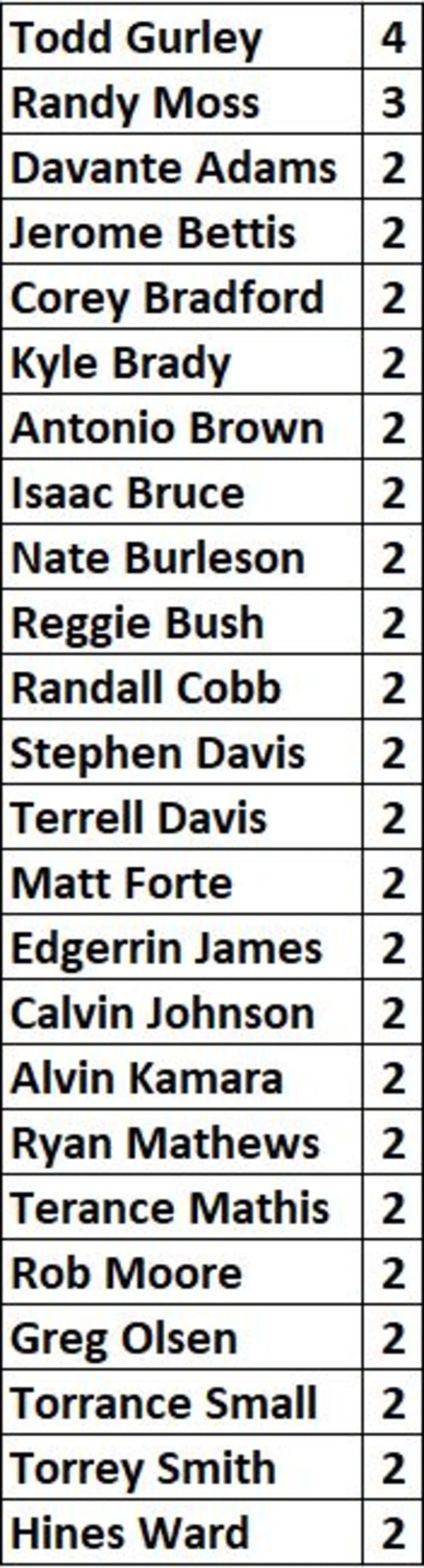
All-time individual octopus leaders:
All-time team octopus leaders:
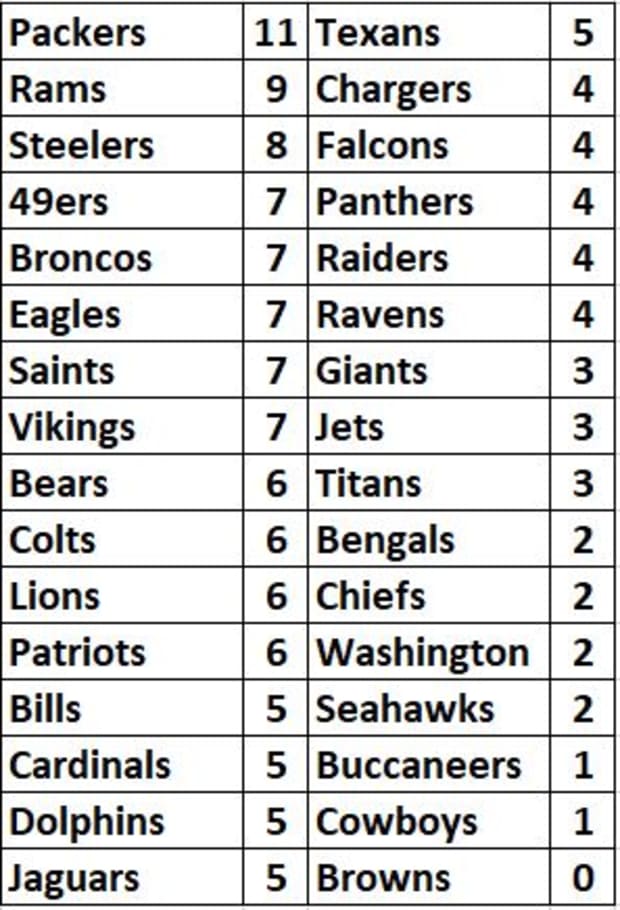
Every octopus in NFL history:
• Question or comment? Email us.
Wednesday, 22 July 2020
New on SI: Remembering the Unlikely Start and Abrupt End of Donald Igwebuike Football Career
Where Are They Now: Donald Igwekuike converted from soccer in Nigeria to football in America, won a national title at Clemson and made it to the NFL. Then an improbable mix-up cut his career short.
“Where the hell’s my kicker?” Danny Ford yelled. The head coach for Clemson scanned the sidelines that day in the fall of 1981. “Dammit, it’s fourth down. Where the hell is he?”
You could excuse the offending party for his lapse. It was the first football game that the truant kicker had ever attended. “Not just played in,” Donald Igwebuike says, cackling at the memory, now almost 40 years later. “It was the first football game I’d ever been to. Man, you think I knew what fourth down was?”
With a few seconds to spare, Igwebuike scampered onto the field. He wasn’t entirely sure where to stand, or how many steps he ought to take before addressing the kick. But Clemson’s center snapped the ball, the holder held it down, and, in his first official field goal attempt at any level, Igwebuike nailed a 52-yarder. Clemson would win that season-opener against Wofford 45-10. And Igwebuike would start every game for the rest of his college career.
It’s just one of the scenes in the wonderfully improbable story of Donald Igwebuike, a cinematic tale that’s equal parts Coming-to-America immigrant story and a classic sports movie, with a strange and incongruous detour into a wrongful accusation flick.
The story starts in Enugu, Nigeria, where young Donald Igwebuike, a speedy soccer player with an irresistible surname—it translates into “unity is strength” in the local tongue of Ibo—traveled around Africa with his elite junior team. Igwebuike, who eventually made Nigeria’s national team, had designs of a professional career, maybe in Europe. But his childhood friend, Obed Ariri, had attended Clemson to play soccer and encouraged the coach to recruit Igwebuike.
At Clemson, Ariri played soccer but also became the kicker on the football team. In the spring of 1981, Ariri was training for the NFL draft and asked Igwebuike to serve as his workout partner. Naturally, Igwebuike tried a few kicks of his own, and damn if the ball didn’t sail through the uprights.
With Ariri off to the NFL, Clemson had a vacancy at kicker. Ariri told Coach Ford about his buddy, another Nigerian ringer. Ford encouraged Igwebuike to join the team. A rising sophomore, Igwebuike agreed on the condition that he could continue playing soccer. Ford agreed. (Igwebuike took a football scholarship so the soccer team could have the extra slot.) Igwebuike won the starting job, and learned as he went, calibrating power and control. By January of his first season—having, throughout the season, familiarized himself with at least some of football’s rules—he kicked three field goals in the Orange Bowl as Clemson won the national championship.
He was thousands of miles from home, in the belly of South Carolina, playing a sport that two years prior he scarcely knew existed (“I thought it was rugby.”) ... and he could scarcely have been happier. Igwebuike took to college life, the happy absurdity of his own story and the camaraderie among his soccer and football teammates. One of them was a defensive lineman, William Perry, famous for his heroic appetite at the training table. Perry was, Igwebuike recalls, “a fun and funny dude,” who would try to kick field goals. Igwebuike recalls that one day a teammate nicknamed Perry “The Fridge.” Everyone laughed. And no one called him William after that.
Igwebuike didn’t know it at the time, but he played a vital role in opening a pipeline of athletic talent flowing to the U.S. from Africa, and from Nigeria in particular. A year after his arrival, a Nigerian basketball star, Akeem Olajuwon, headed to the University of Houston. Around the same time, Christian Okoye, a thickly-built running back from Igbewuike’s hometown, decamped for Azusa Pacific University in California before going on to star in the NFL.
At Clemson, Igwebuike got better every season, and by his senior year, it was clear he had a shot at the NFL. Returning the favor, Obed Ariri came back to Clemson’s campus to help Igwebuike prepare for the draft. To his slight disappointment, Igwebuike slipped to the 10th round, where he was selected by Tampa Bay. “You must mean Green Bay,” Igwebuike said upon hearing the news. “It’s gonna be cold up there.”
“No,” coaches assured him. “Not Green Bay. Tampa Bay.”
Igwebuike was confused. His mentor and friend Ariri was trying out for the Buccaneers. How could he be heading there, too? “Well,” he was told, “I guess you’re gonna have to beat out your friend for the job.”
It made for a sensational coincidence, two converted soccer players, boyhood friends from Nigeria, now dueling to become a starting NFL kicker. It also gave new dimension to the concept of awkward. “It was one of the hardest things I’ve ever experienced,” says Igwebuike. “Before camp, I just told him, ‘Obed, do the best you can. I’ll do the best I can. Let’s leave it to the coach to decide, and not let it affect our friendship.’”
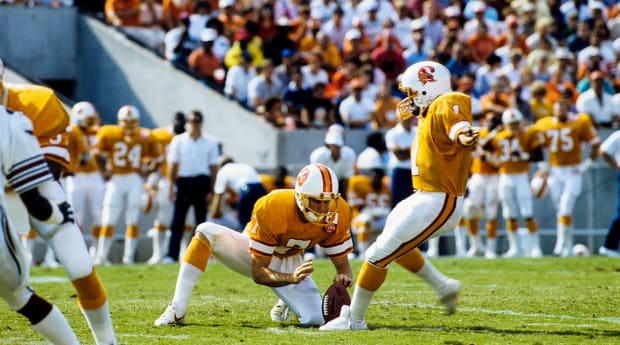
Igwebuike won the kickoff bake-off, so to speak, and was suddenly in the NFL. As he recalls it, his starting salary was $60,000, but his contract was filled with bonuses. “Playing in the NFL was such a dream,” he says. “I was always thinking: There are how many million people in the United States, and only a thousand get to do this for a living. ... It really was like a dream. The publicity, the name recognition, I was feeling blessed to be a part of it.”
He also felt fortunate to have been drafted by a warm weather team, Tampa Bay and not Green Bay. It was an easy joke. But he says that, as a Nigerian, he was so unaccustomed to inhospitable weather that he felt physical pain when asked to kick in the searing cold. “Wide receivers, linebackers, running backs ... they can go out there, run and come back to the heaters,” he says. “[The kicker] just stands on the sidelines and when it’s your turn to kick, you’re expected to be warm! I missed the shortest field goals of my career in Green Bay, but the ball was frozen!” Even now, at age 59, he winces just thinking about it.
Like all kickers, Igwebuike worked in the equivalent of a satellite office, a member of a three-man assembly line. His duties were altogether different from the blocking, tackling, throwing and catching performed by his teammates. While they were risking limb and life—he ticks off a half-dozen teammates, including his best friend, Bucs cornerback Bobby Futrell, and Chris Doleman, who died before reaching age 45—Igwebuike could go weeks and weeks without physical contact, much less getting tackled. Even the bars on his helmet suggested “otherness.”
But he was popular among his teammates, popular for the sense of humor he deployed early and often. And he reciprocated their warmth. Today, asked about favorite NFL memories, reflexively, he lists people, not events. He was blessed, he says, to have played alongside Steve Young and Vinny Testaverde and played against everyone from Walter Payton to Dan Marino to Reggie White.
In the offseason, he continued to play soccer. It was his first love. But he also found that it helped his occupation. “I was always a midfielder,” he says. “One of the qualities of that position is accurate, precise passes. So I think that helped me be a decent NFL kicker.”
He was better than decent. His rookie year, he made 22 of 32 field goals and his three makes from 50-plus yards tied for the NFL lead. In large part because of his outgoing personality—and at least in small part because of his exotic, mellifluous name—he became a fan favorite. He held onto his job and by his third year, he made 14 of 18 attempts.
After five years in Tampa, Igwebuike had become the Buccaneers’ all-time leading scorer. (Yes, it’s a statement about the Buccaneers’s ritual futility, as much as it is of Igwebuike’s kicking prowess.) Before the 1990 season, he was signed by the Vikings, a cold-weather franchise, but at least one that played in a dome. That season, Igwebuike was on a trajectory heading for the Pro Bowl. After eight games, he had made 14 of 16 field goals and all 19 of his extra points.
And then came one of the more improbable and bizarre chapters you will ever come across in a sports narrative—and a reason that Igwebuike, otherwise so jovial, was at first reluctant to speak for this story.
Throughout his NFL career, Igwebuike had been generous to a fault, sending money home and helping Nigerian friends. In the fall of 1990, a friend, Maduwuba O. Ibekwe, flew from Nigeria to the U.S. on a ticket Igwebuike had purchased. When Ibekwe landed at Orlando International Airport on October 11, he was intercepted by U.S. customs service officials, who found three packets of heroin in his undergarments. He was transferred to a local hospital and was believed to have ingested as many as 31 packets. Also arrested was Ibezim Ofedu, who allegedly accepted drugs from an undercover customs agent.
In exchange for a lesser sentence, both men agreed to cooperate with the government and secretly recorded calls with Igwebuike. Suddenly, one of the most accurate kickers in the NFL that 1990 season was charged with smuggling conspiracy, conspiracy to possess with intent to distribute and importation of heroin. If convicted and sentenced to the maximum on all charges, he could face up to 120 years in prison and $6 million in fines.
The indictment of an NFL player on international drug smuggling charges made for a salacious headline. The Vikings issued a terse statement, and suddenly cleaving uprights with his kicks was the least of Igwebuike’s concerns. Apart from being sensationally out of character for Igwebuike, the fact pattern made little sense. While both Ofedu and Ibekwe pled guilty, the government couldn’t prove a case against Igwebuike.
In the spring of 1991, he was acquitted by a federal jury on all charges. Upon hearing the verdict, he pumped his fist as if he’d nailed a long field goal. “I went through hell,” he said at the time, teary-eyed, as he puffed a victory cigar outside the federal courthouse in Tampa.
Still shaken by the ordeal—“Trust me, it was terrible,” he says—Igwebuike marvels at how perilously close he came to losing his reputation. “I felt vindicated,” he says. “But it’s a lot easier to ruin your name than to get your name back.” As is so often the case, his arrest was splashy news; the headline sizes and blocks of airtime devoted to his exoneration were considerably smaller.
Happy as he was for the vindication, the episode exacted a huge price on his professional career. While other kickers with lesser stats were suddenly signing seven-figure deals, Igwebuike was, unmistakably, black-balled. He would kick for the Baltimore Stallions and the Memphis Mad Dogs of the Canadian Football League but never again in the NFL.
A ferocious optimist, Igwebuike was determined not to become embittered, much less broken, by what he calls “a nasty, crazy situation.” While playing in Baltimore, he grew fond of the Maryland suburbs, where the sizable Nigerian ex-pat community included family members. He settled there, a father of five kids—four daughters and a son—currently ages middle school to medical school.
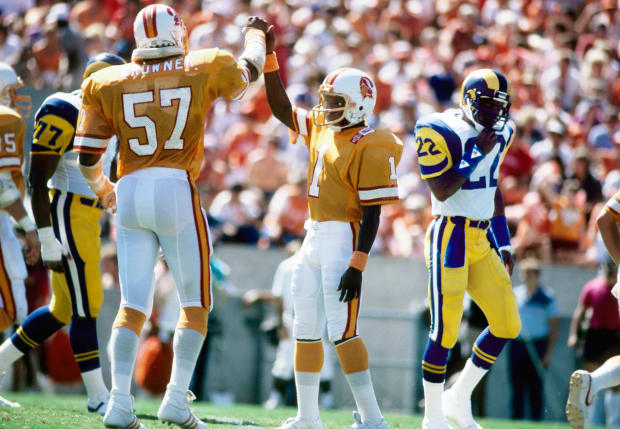
He wears an expansive smile as he talks about his kids and his extended family, including his nephew, Godwin Igwebuike, who played defensive back at Northwestern and has made assorted NFL practice squads. He also is in close contact with various teammates from Clemson and the NFL. And, yes, he’s still friendly with his boyhood friend and Clemson mentor, Obed Ariri, who lives in Tampa.
After leaving football, Igwebuike has launched a kicking academy. He is guarded about his employment history, but has worked in sales, health care and mental health. He is much more passionate when discussing soccer. Igwebuike is chairman of the Ex-Rangers Players Association, a group of retired professional soccer players who came from Africa and played worldwide, including in the Premier League. The group holds annual conventions, which are reunions and occasions to swap stories; but they double as fundraisers for other former prominent African players who have fallen on tough times. This year’s convention was canceled but the 2021 event will be held in Maryland, with Igwebuike serving as organizer and host.
As the Adidas sweatshirt he wears for this interview suggests, Igwebuike still plays soccer, too. Within a few pounds of his NFL weight of 180, Igwebuike, crowding age 60, is a stalwart in multiple leagues in Maryland, including NSL, the Nigerian Soccer League. “It’s funny, I can’t jog around the field for two laps,” he says. “But I can still play soccer for two hours. It’s my only exercise.”
As for kicking the football, he reckons he can still do that, too. Asked how many extra points out of 100 he could make today, he laughs that familiar laugh.
“In warm weather?”
Sure, in warm weather.
“Oh, 99.”
• Question or comment?
Email us.Tuesday, 21 July 2020
New on SI: With Dysfunction Surrounding in D.C., Washington Hires Longtime Business Associate
Will a name change help elevate Washington's brand?
There's a lot of uncertainty certainty surrounding the NFL season and Sports Illustrated's own Andrew Brandt took a look at some of the challenges teams may face this upcoming season.
On Monday, Dan Snyder and Washington hired a longtime business associate, Terry Bateman, to help out head coach Ron Rivera, a move that most Washington fans were not happy about as they're looking for changes to take place in the culture. With Bateman now a part of the organization, how does that affect the front office?
Kaitlin O'Toole is joined by
Washington Football's Chris Russell for more on this and if a name change can help elevate the brand.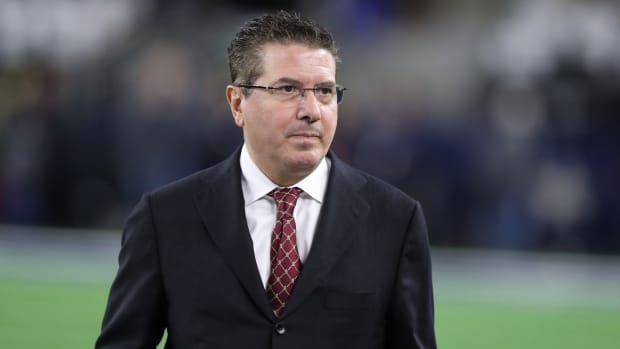
Latest News and Videos from Sports Illustrated
- 2020 Pittsburgh Steelers Fantasy Team Preview: Don't Call it a Comeback, They've Been Here For Years
- NHL Qualifying Round Playoff Preview: Oilers vs. Blackhawks
- Get to Know Your Stanley Cup Playoff Teams: Canadiens vs. Penguins Odds
- Juventus Opens Up Serie A Lead; Ronaldo, Immobile Both Hit 30 Goals
Monday, 20 July 2020
Sunday, 19 July 2020
Friday, 17 July 2020
Wednesday, 15 July 2020
New on SI: 2020 Miami Dolphins Team Preview: New Look Offense Has Something to Prove in Wide-Open AFC East
SI Fantasy's Team Preview series from high-stakes legend Shawn Childs aims to break down the Miami Dolphins to evaluate the offense, defense, coaches and everyone in between with a fantasy-slanted analysis.
This is a preview article from our Team Outlook series.
If you are already a FullTime Fantasy subscriber, click here to read the expanded outlook.Unlock premium access to the full outlook by subscribing to FullTime Fantasy where we will help you dominate with our Draft Kit, customized rankings, expert consensus rankings, Preseason Pro, Advanced ADP, Premium forums to ask our experts unlimited questions 24/7 & more. Check us out! Click here to subscribe now by Saturday, July 25th using promo code TD30 for 30% off your first two months!
Coaching Staff
After a slow start (0-7) in his rookie season as a head coach, Brian Flores saved his job by winning five of his final nine games. The Miami Dolphins started the year by being outscored 162 to 26 over the first four contests.
Flores worked in New England’s system for 15 years with a variety of jobs. Over the last eight seasons with the Patriots, he worked on the defensive side of the ball as a defensive assistant, safeties coach, and linebackers coach. Flores has been a part of four Super Bowl winnings teams and seven AFC Championships.
After retiring for three years, Miami coaxed Chan Gailey into taking over their offensive for 2020. He struggled over his five seasons as a head coach (34-46) while making the playoffs in 1998 and 1999 for the Cowboys. Gailey coached in the NFL for 26 seasons, with nine years coming as an offensive coordinator.
Last year Miami ranked 25th in points scored (306) and 27th in offensive yards, which was an improvement from 2018 (30th in points scored – 319 and 31st in offensive yards).
Josh Boyer takes over as the defensive coordinator after working last year as a cornerbacks coach while handling the defensive pass game responsibilities. He worked with Brian Flores in New England for 13 seasons.
The Dolphins allowed a league-high 494 points, which was 61 more than 2018. They also slipped a notch in yards allowed (30th).
Quarterbacks
QB Tua Tagovailoa
Last year Tagovailoa was on a higher path after nine games (2,840 passing yards with 33 TDs and three Ints) than Joe Burrow, but his season ended in mid-November with a significant hip injury and a broken nose. In Week 8 of the season, he passed for 418 yards with four TDs and one Int against LSU, but Burrow (393/3) won the game 46-41.
Tagovailoa had an exceptional TD: INT ratio (87:11) in college with strength in his completion rate (70.0) over his last 24 games.
Last year Miami climbed to 12th in passing yards despite gaining only 6.7 yards per pass attempt. The Dolphins decided to improve their offensive line rather than investing in more offensive talent with the other draft picks over the first two rounds in this year’s draft.
Tagovailoa is a high ceiling player that needs to shine for Miami to become a powerhouse again in the AFC East. His upgrades at wide receiver should come over the next couple of drafts or via free agency.
The Dolphins don’t have enough talent in the passing game for Tagovailoa to hit the ground running. I gave him 93 percent of the quarterback snaps in the first run of the projections, but that number could be lower if Ryan Fitzpatrick gets in the way early in the year. For now, Tagovailoa is projected for 3,908 combined yards with 21 touchdowns.
His early ADP is 184 in the high-stakes market as the 28th quarterback off the table.
QB Ryan Fitzpatrick
Over his last 23 games, Fitzpatrick has shined multiple times for the Bucs and the Dolphins while delivering elite value to some of his WRs. Last year he stole the starting job from Josh Rosen with his best play coming over the final five games (326 passing yards per game with 11 TDs). The Dolphins drafted QB Tua Tagovailoa with the fifth overall pick, which points to Fitzpatrick returning to a bench role this year. This best part of his game last year was unlocking the keys to DeVante Parker (72/1202/9). Possible short-term matchup play if Fitzpatrick earns the starting gig for a couple of games in September.
Other options: Josh Rosen, Jake Rudock
Running Backs
RB Jordan Howard
Howard held off RB Miles Sanders for the first nine games, but he failed to rush for over 100 yards in any week. From Week 4 to Week 9, Howard gained 476 combined yards with six TDs and seven catches highlighted by one explosive game (115 combined yards with three TDs and three catches). His season ended with a shoulder issue, costing him the final seven weeks.
Over his first three seasons in the NFL, Howard gained 3,938 combined yards with 25 TDs and 72 catches over 47 games. He averaged 283 touches per year with most of his big-play ability coming in his rookie season (14 gains of 20 yards or more).
Miami brought him in to upgrade their dismal success on early downs (297/962/7 – 3.2 yards per rush). The Dolphins also traded for RB Matt Breida on draft day, which points to him being a change of pace player and any higher upside in the passing game.
Howard has an early ADP of 110 as the 39th running back drafted. I have him ranked 33rd in my initial ranking while being projected for 958 combined yards with about five TDs and 22 catches on 215 touches. I expect his value to rise this summer, and Howard may end up with a floor of 240 chances in 2020.
RBs Matt Breida, Kalen Ballage & Myles Gaskin
To read the full outlook, subscribe now by Saturday, July 25th using promo code TD30 for 30% off your first two months!
Wide Receivers
WR DeVante Parker, MIA
It only took five seasons and a sharp kid from Harvard to figure how to get Parker the damn ball. He set career-highs in catches (72) receiving yards (1,202), touchdowns (9), and targets (128), highlighted by his play over the final seven games (39/733/5 – 7/135, 7/159/2, 4/72/2, 5/111/1, and 8/137)). Parker showed growth in his catches over 20 (21) and 40 yards (7) over his previous 39 games (27 and 7) in 2019. The Dolphins extended his contract in mid-December, which puts him at the services of rookie QB Tua Tagovailoa for the next four years. Chemistry is a big part of football, but it could be gone after one excellent season. Torn here, I want to believe, but I can’t get past his slow start to his career.
His early ADP came at 61 as the 23rd wide receiver selected. I set his bar at 76 catches for 1,063 yards and six TDs in the first round of Sports Illustrated projections.
WR Preston Williams, MIA
To read the full outlook, subscribe now by Saturday, July 25th using promo code TD30 for 30% off your first two months!
WR Albert Wilson, MIA
Over his first four years in the NFL with the Chiefs, he caught 124 passes for 1,544 yards and eight TDs on 198 targets. His game did show growth in 2017 (42/554/3) with Kansas City. In 2018, Wilson started as a rotational receiver over the first three games (8/142/2 on 11 targets) before earning three starts over the next four games. He flashed in the sixth game (6/155/2), setting up a waiver wire frenzy. Unfortunately, a hip injury ended his season the following week. Last year he battled a calf issue over his first month, which led to three missed games and emptiness in Week 1 (2/13). Wilson started to gain momentum over his final six games (29/267 on 37 targets) last year with his best value coming over his final three outings (5/59, 7/79, and 5/59). More of a flier than a target while never starting a game in 2019.
WR Allen Hurns, MIA
After flashing upside in his first two years (51/677/6 and 64/1031/10) with the Jaguars, Hurns struggled to find repeated success in any of his next four seasons. In 2015, he had 19 catches over 20 yards and ten TDs, but Hurns only has 23 catches over 20 yards and nine touchdowns over his next 51 games. Last year he had one contest (5/68) with more than four catches while failing to score over 15.0 fantasy points in PPR leagues in any game. Only waiver wire type options if Hurns gets a bump in playing time.
Other options: Jakeem Grant, Isaiah Ford, Mack Hollins, Malcolm Perry, Ricardo Louis, Greg Jennings
Tight Ends
TE Mike Gesicki, MIA
To read the full outlook, subscribe now by Saturday, July 25th using promo code TD30 for 30% off your first two months!
Other options: Durham Smythe, Chandler Cox, Michael Roberts, Chris Myarick
Kicker
K Jason Sanders, MIA
Over his first two seasons in the NFL, Sanders made 41 of 50 field goals (82.0 percent) while showing value from 50 yards or more (4-for-6). He missed one extra-point in each season, leading to a 97.0 percent success rate. In 2019, his field goal rate (76.7) did fall off from his rookie season (90.0). Miami scored only 72 touchdowns over the past two years. Possible upside leg, but the Dolphins have plenty of work to do before being considered a top offense.
Defense
The Dolphins finished last year 27th in rushing yards allowed (2,166). Opponents averaged 30.9 rushes per game, which led to 4.5 yards per carry with 15 TDs. Miami only allowed nine runs over 20 yards (tied for 12th in the NFL).
Their pass defense gave up a league-high 39 touchdowns with 13 interceptions and only 23 sacks. The Dolphins ranked 26th in passing yards allowed (4,198) with quarterbacks gaining 8.0 yards per pass attempts (68 completions allowed over 20 yards).
To read the full outlook, subscribe now by Saturday, July 25th using promo code TD30 for 30% off your first two months!
In the premium outlook, on defense you'll find write-ups for DT Davon Godchaux, DE Christian Wilkins, LB Kyle Van Noy, LB Raekwon McMillan, LB Jerome Baker, LB Emmanuel Ogbah, CB Xavien Howard, CB Byron Jones and S Eric Rowe.
Team Defense Outlook
The second starting safety option for the Dolphins looks to be in flux with rookie Brandon Jones possibly having the best chance to earn the starting job. His game can be hit or miss when facing more talented players.
This defense has talent in the secondary with a reasonable core at linebacker. The Dolphins' lack of impact pass rushers does lengthen the passing window on some plays. I expect better play defending the run. Overall, moving in the right direction, but they still need playmakers to create turnovers—only a waiver wire fantasy defense with possible matchup value.
Free Agency, Draft, Offensive Line, Offensive Schedule & Defensive Schedule
Unlock premium access to the full outlook by subscribing to FullTime Fantasy where we will help you dominate with our Draft Kit, customized rankings, expert consensus rankings, Preseason Pro, Advanced ADP, Premium forums to ask our experts unlimited questions 24/7 & more. Check us out!
Subscribe to:
Comments (Atom)